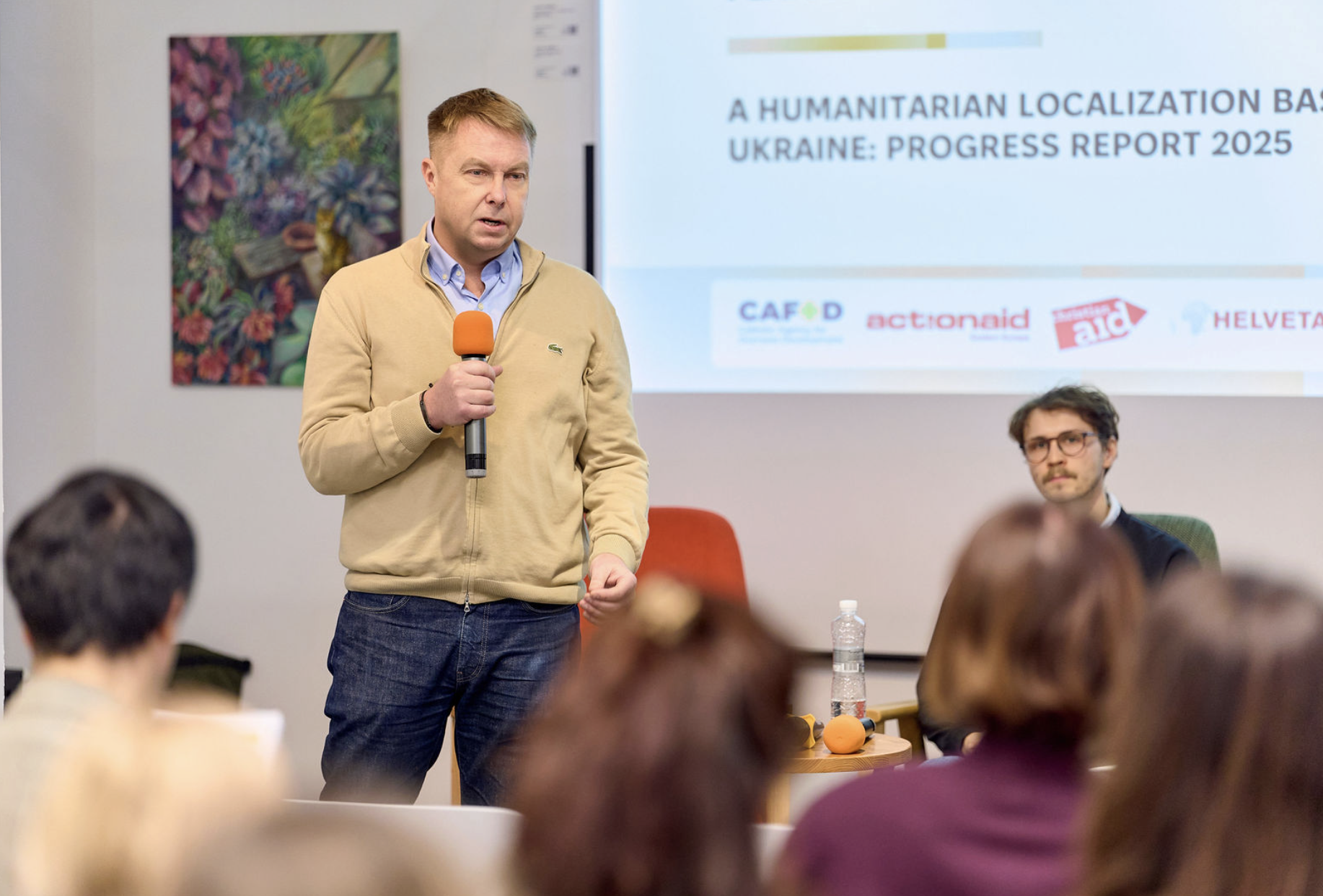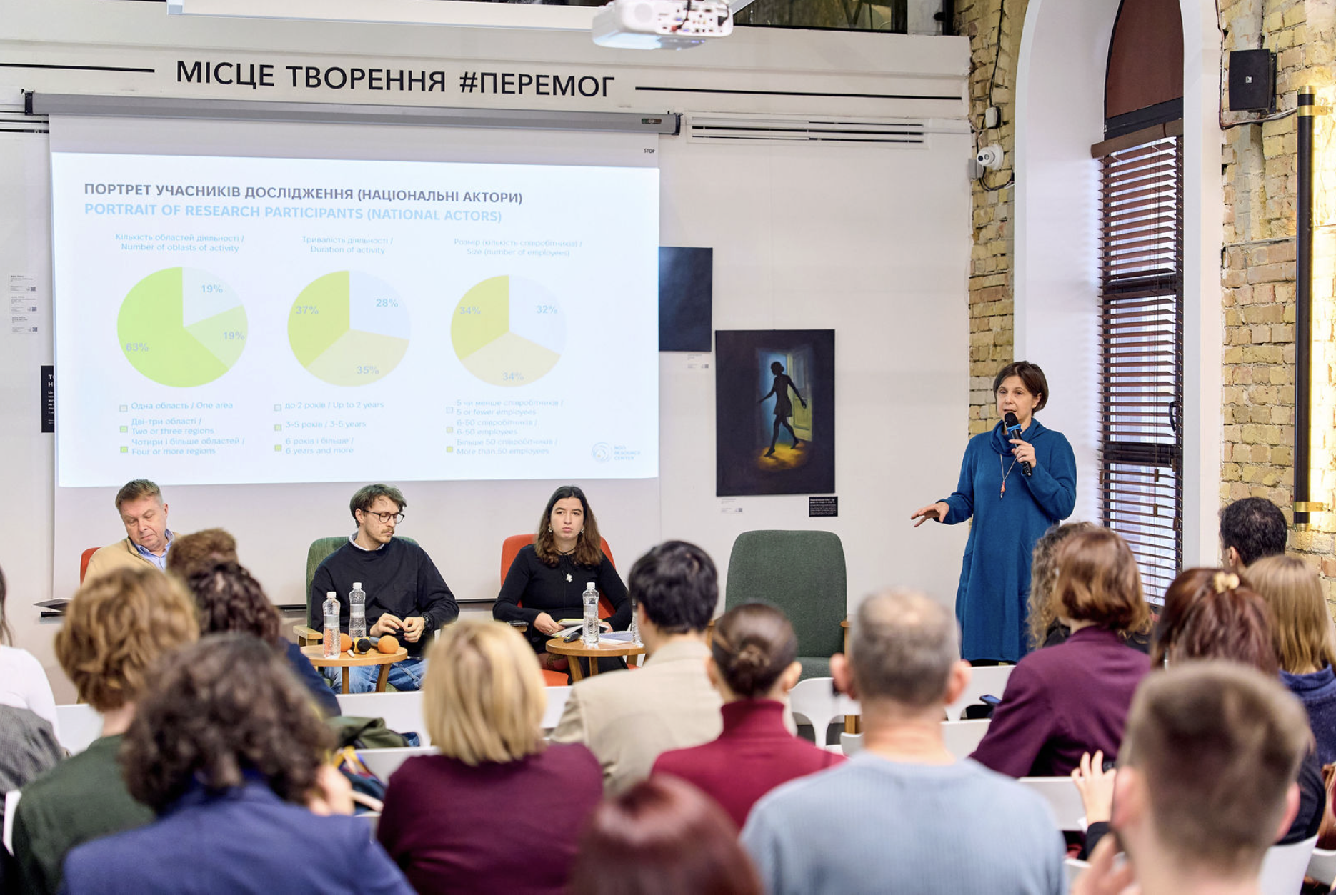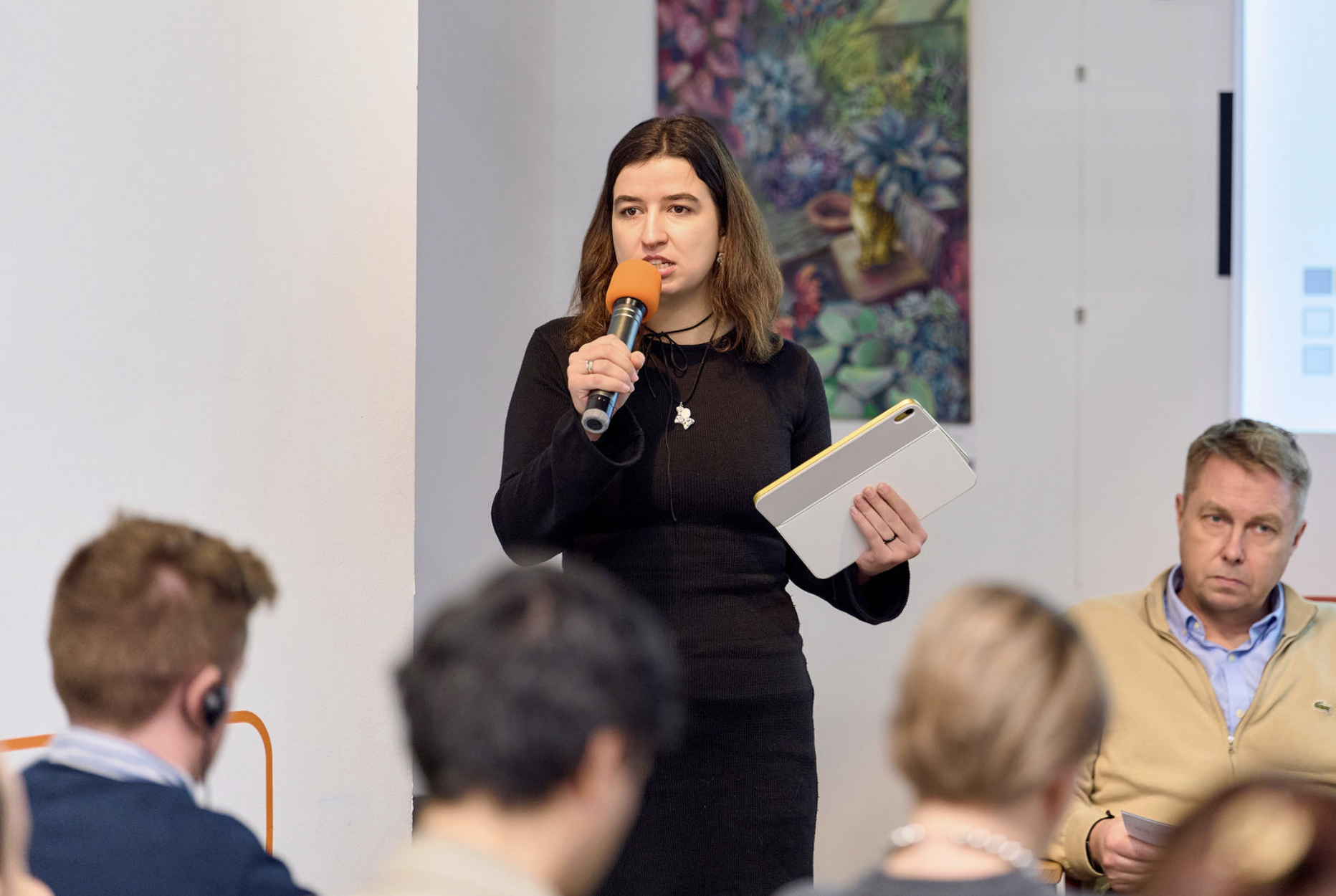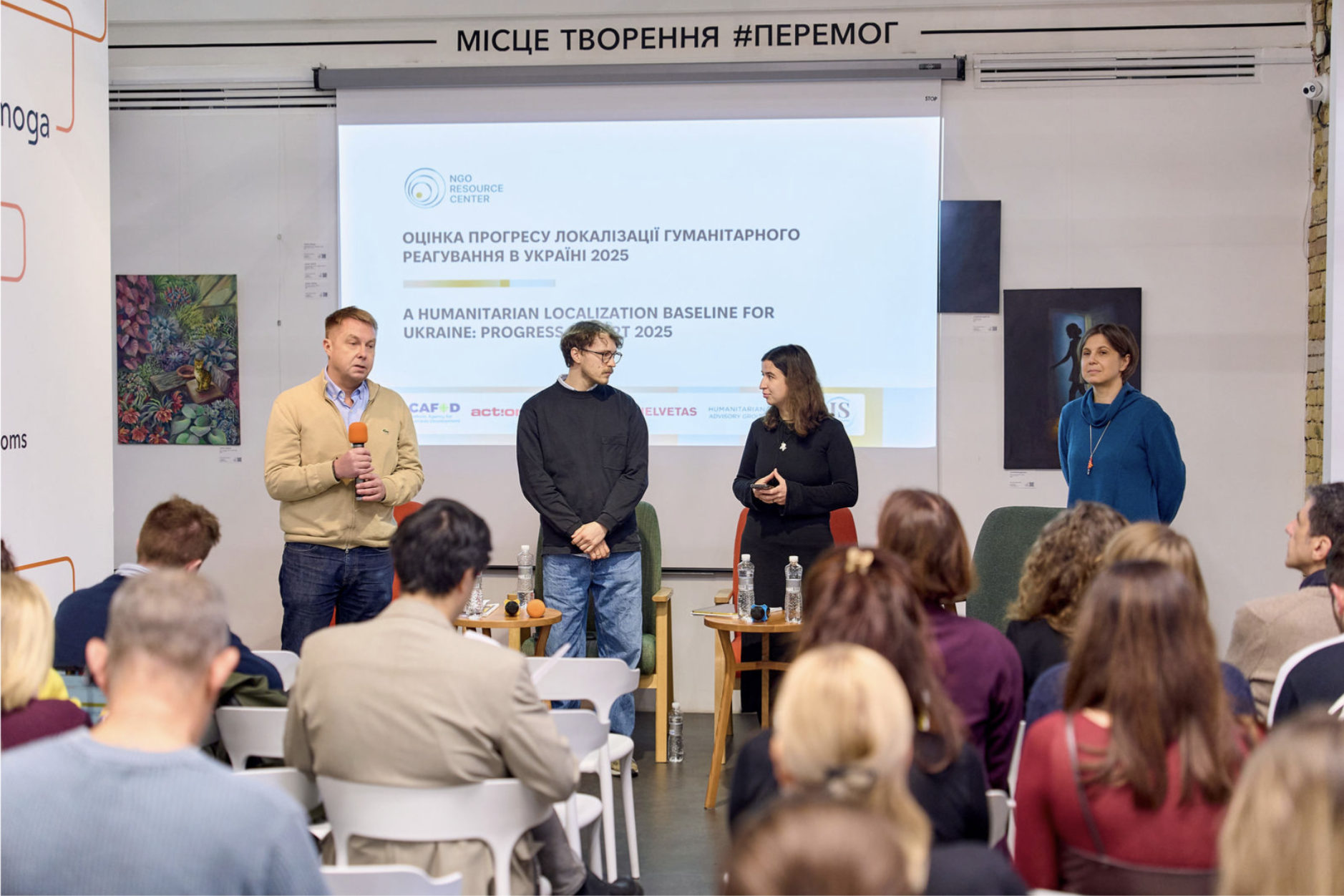
The NGO Resource Centre presented the results of its annual study on the development of humanitarian aid localization in Ukraine. Each year, the NGO Resource Centre, together with its partners, forms a clear understanding of progress, existing barriers, and opportunities for change within the overall humanitarian response system.
The study was made possible thanks to the financial support of ActionAid, CAFOD, ChristianAid, and Helvetas, as well as the NGO Resource Centre’s own funding through fairly allocated overhead costs.
Research Methodology
The 2025 assessment is based on a survey of 318 representatives of national and international civil society organizations, as well as 20 in-depth interviews.
This year’s report includes a comparative analysis across seven key areas of localization. The study provides a clear picture of changes in the following areas:
Particularly encouraging trends were recorded in two areas traditionally considered the weakest: financing and influence on policymaking.
“I sincerely believe in the need to build a transparent humanitarian system that truly serves those who need assistance. I strongly hope that humanitarian actors will use this data for honest self-assessment and practical decisions — so that localization stops being a trend and becomes the norm of humanitarian response, not only in Ukraine but globally.” - Ruslana Romanchuk